Diffusers
Reed Diffuser Base & Fragrance Load: A Buyer’s Formulation Guide
Dieser Leitfaden ist noch nicht auf Deutsch verfügbar. Sie lesen die englische Version.
For B2B buyers sourcing reed diffusers—whether for a hotel chain, spa collection, or retail brand—getting the formulation right is critical to product performance and customer satisfaction. The interplay between the base liquid, fragrance load, and reeds determines everything from scent throw and longevity to whether the reeds clog or the liquid turns cloudy. This guide breaks down the key variables so you can specify with confidence and avoid common production pitfalls.
Understanding Reed Diffuser Bases: Alcohol-Free vs. Alcohol-Containing
The base liquid is the carrier for the fragrance. Two broad categories dominate the market:
Alcohol‑free bases (often based on dipropylene glycol, methoxymethylbutanol, or proprietary blends) are the most common choice for premium reed diffusers. They evaporate slowly, provide a steady scent release over weeks, and are generally compatible with a wide range of reeds. Because they have low volatility, they usually allow a higher fragrance load—typically around 15–25%—without causing rapid evaporation or separation.
Alcohol‑containing bases (usually ethanol or isopropyl alcohol) are sometimes used for faster scent dispersal or to improve solubility for certain fragrance oils. However, alcohol evaporates quickly, which can lead to uneven scent performance and may increase the risk of reed clogging if the fragrance load is not carefully balanced. Alcohol‑based formulations often require a lower fragrance load to maintain clarity and prevent the reeds from drying out too fast.
When you discuss specifications with your factory, clarify the base composition. Alcohol‑free bases are often perceived as higher quality for long‑lasting, consistent diffusion. Ask for compatibility data if you plan to use a fragrance oil that you supply; not every fragrance dissolves well in every base.
Optimizing Fragrance Load for Performance and Stability
Fragrance load—the ratio of fragrance oil to base liquid—directly impacts scent intensity, lifespan, and product stability. While it’s tempting to push the load as high as possible for a stronger scent, going too far can backfire:
- Separation – Excessive fragrance oil may not remain fully dissolved, leading to visible layers or cloudiness.
- Clogging – Heavy, undissolved residues can block reed capillaries, stopping the flow entirely.
- Rapid evaporation – In alcohol bases, a high load can accelerate evaporation and shorten the product’s effective life.
Most alcohol‑free formulations fall in the 15–25% range, while alcohol‑based mixes often sit at 10–15%. However, these figures are guidelines only. The optimal load depends on the specific fragrance chemistry, base composition, and reed material. A floral-fruity fragrance might need a different ratio than a woody‑amber one, even within the same base.
Before committing to a production run, always insist on accelerated stability testing. A reputable factory will test your blend at elevated temperatures and over time to check for separation, color change, and re‑clogging. Visit our buyer resources for a checklist of what to ask during sampling.
Reed Selection and Evaporation Control
Reeds are not just sticks—they are the engine of the diffuser. Their number, diameter, material, and porosity control how fast the fragrance evaporates and how strong it smells.
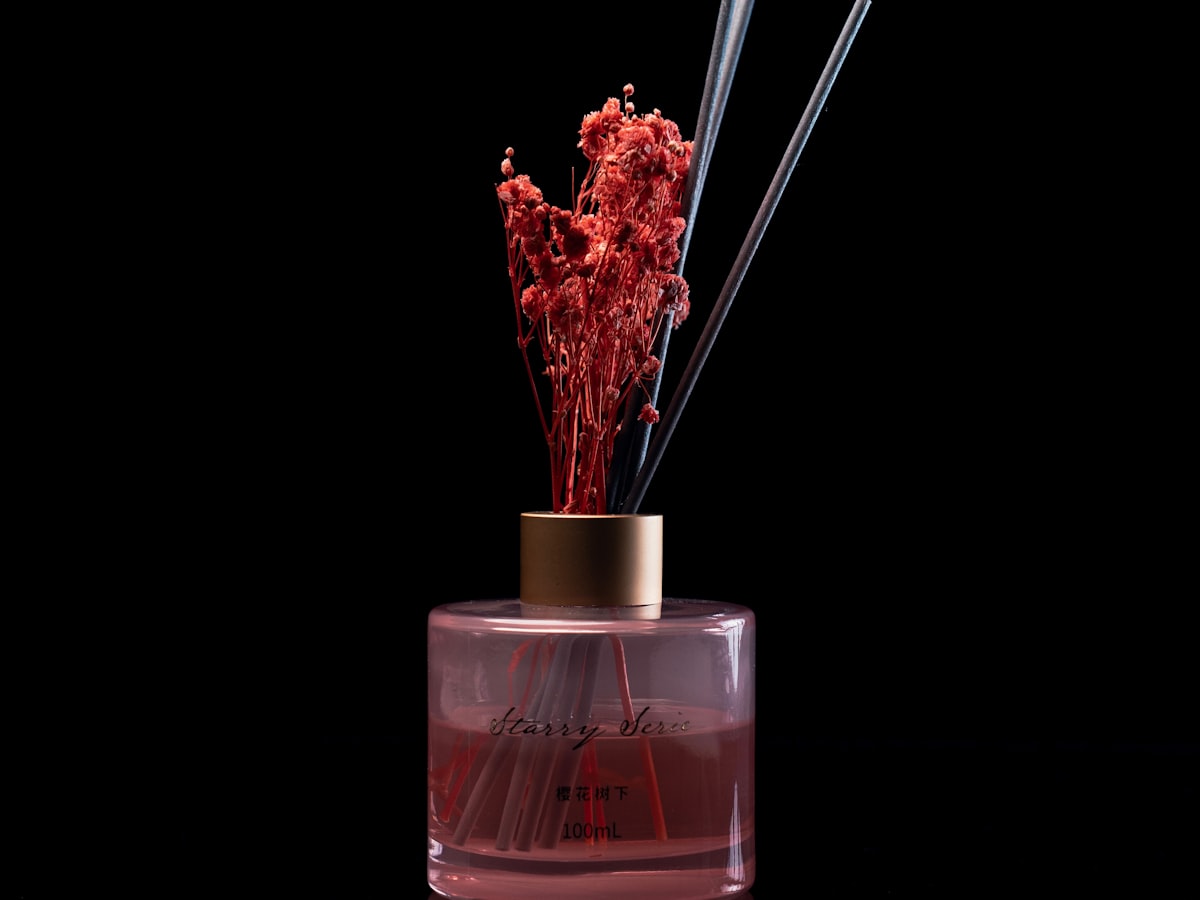
- Number of reeds: More reeds increase the total evaporation surface area, yielding a stronger scent but consuming the oil faster. For a standard 100 ml diffuser, 6–8 reeds is common, but values range from 4 to 12 depending on desired intensity and room size.
- Reed material: Natural rattan is popular because of its high capillary action, but cheap rattan can clog. Fiber reeds (synthetic) offer very strong initial throw but may not last as long. Some buyers prefer a mix.
- Diameter and length: Thicker reeds deliver more oil but can clog if the base is too viscous. Longer reeds expose more surface area above the bottle, enhancing evaporation.
To avoid clogging, match the reed type to the base and fragrance load. High‑viscosity bases or heavy fragrances work better with high‑density fiber reeds that have larger channels. Always request testing with the exact reeds you intend to use. A single formulation change (like switching from 3 mm to 4 mm rattan) can drastically alter performance.
Customizing Your Reed Diffuser: A Checklist for B2B Buyers
When you contact a factory like Aromiso, having a clear specification sheet saves time and avoids miscommunication. Use this checklist to guide your inquiry:
- Base type: Specify alcohol‑free or alcohol‑containing. If you have a custom base requirement, provide the MSDS or formulation details.
- Fragrance load target: State your desired percentage and ask if the factory recommends any adjustment based on their experience with similar fragrances.
- Reed specifications: Number, length, diameter, material (rattan, fiber, bamboo). Clarify if reeds are included or need separate sourcing.
- Container and volume: The bottle neck diameter affects evaporation. Ensure the reeds fit the opening without too much gap.
- Evaporation rate / longevity: Define your target period (e.g., 2 months, 3 months). Ask for test reports under controlled conditions.
- Compatibility testing: Insist on a sample run with your approved fragrance oil, base, and reeds. Check for clogging, scent throw, and visual appearance over at least two weeks.
- Regulatory compliance: Confirm that the base and fragrance comply with IFRA standards and the destination market’s VOC regulations (especially for alcohol‑based products).
Aromiso’s team regularly guides buyers through these decisions. Our partner factories offer a wide selection of alcohol-free bases and high-quality reeds, with the flexibility to tailor formulations to your brand. Explore our ready-to-ship diffuser catalog for a starting point, or contact us to discuss a custom project.
Final Word
Getting the reed diffuser base and fragrance load right is less about following a fixed formula and more about understanding the interplay of materials. By choosing the right base, dialing in the load through testing, and matching reeds to the formulation, you create a product that performs reliably and builds your brand’s reputation. Use the checklist above as your specification framework, and partner with a factory that values transparency and technical support.